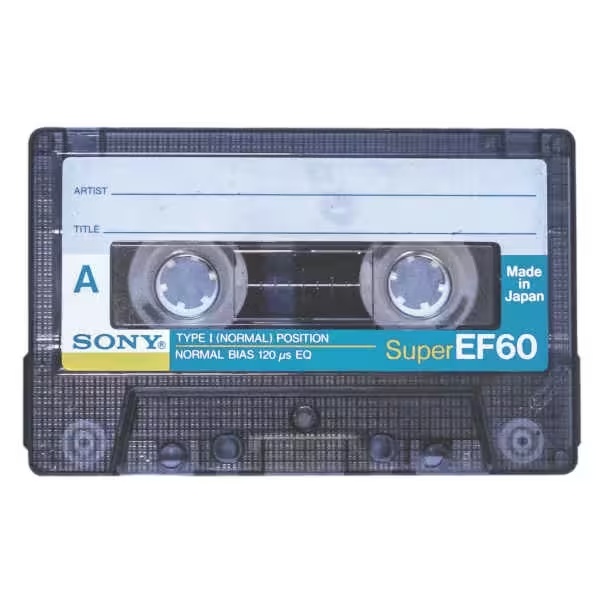
The History of Compact Cassettes
The compact cassette stores sound on magnetic tape. The technology traces back to Fritz Pfleumer, who invented magnetic tape in 1928. In 1935, AEG built the first reel-to-reel tape recorder that used this invention. Early reel-to-reel machines were expensive and hard to operate. They were mostly used by professionals at radio stations and recording studios.
During World War II, magnetic tape technology was not widely known outside Germany. When Allied forces captured Radio Luxembourg, they took reel-to-reel recorders with them. After the war, the American company Ampex developed the technology further and began manufacturing recorders for commercial use.
The shift from wide reel-to-reel tape to a narrower format happened at Philips in Eindhoven. They introduced the compact cassette in Europe in 1963 and in the USA in 1964. The basic principle was the same as reel-to-reel. The tape was just narrower and enclosed in a small plastic shell. In the USA, Philips first sold it under the brand name Norelco. The name “Compact Cassette” was adopted in 1965. The format became hugely popular after Philips licensed it to other manufacturers for free. Sony played a key role in pushing for this open licensing.
Audio Tracks and Channels
The magnetic tape inside a compact cassette is 3.81 mm wide. Over the years, different track and channel combinations have been used. The first Philips EL 3300 recorder used two mono tracks, one for each tape direction. Very soon, a new layout became the standard: four tracks on the tape, with two adjacent tracks recorded in each direction. This gave one stereo signal per side. The standard format is called 4 tracks, 2 channels.
Rarer setups also existed. Some used 4 tracks and 4 channels in one direction. Others went as far as 8 tracks and 8 channels in one direction. In practice, when digitizing cassettes, you can almost always assume the tape has one stereo signal (2 channels) or one mono signal per direction. Other configurations are extremely rare.
Cassette Types
A cassette must be played back with the same equalization (EQ) curve that was used when recording it. Different cassette types use different EQ curves. The playback deck must support at least Type I, Type II, and Type IV. Type II and Type IV share the same EQ curve.
Some decks detect the cassette type automatically from notches on the shell. Others require manual selection. When digitizing, always check that the shell notches match the actual tape type.
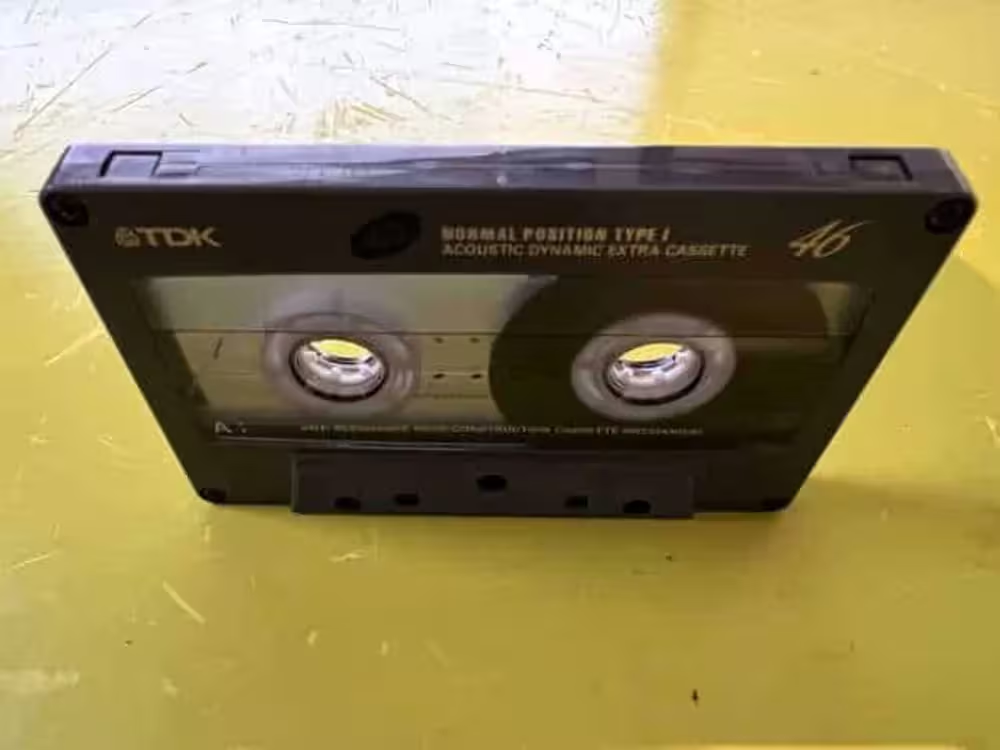 Type I compact cassette
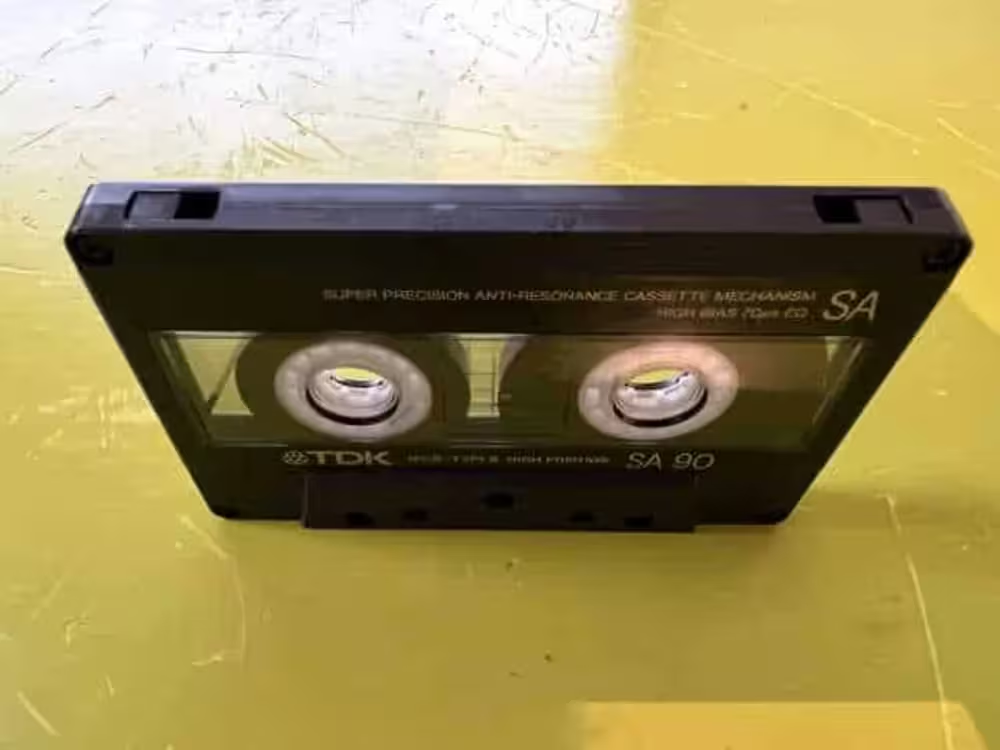 Type II compact cassette
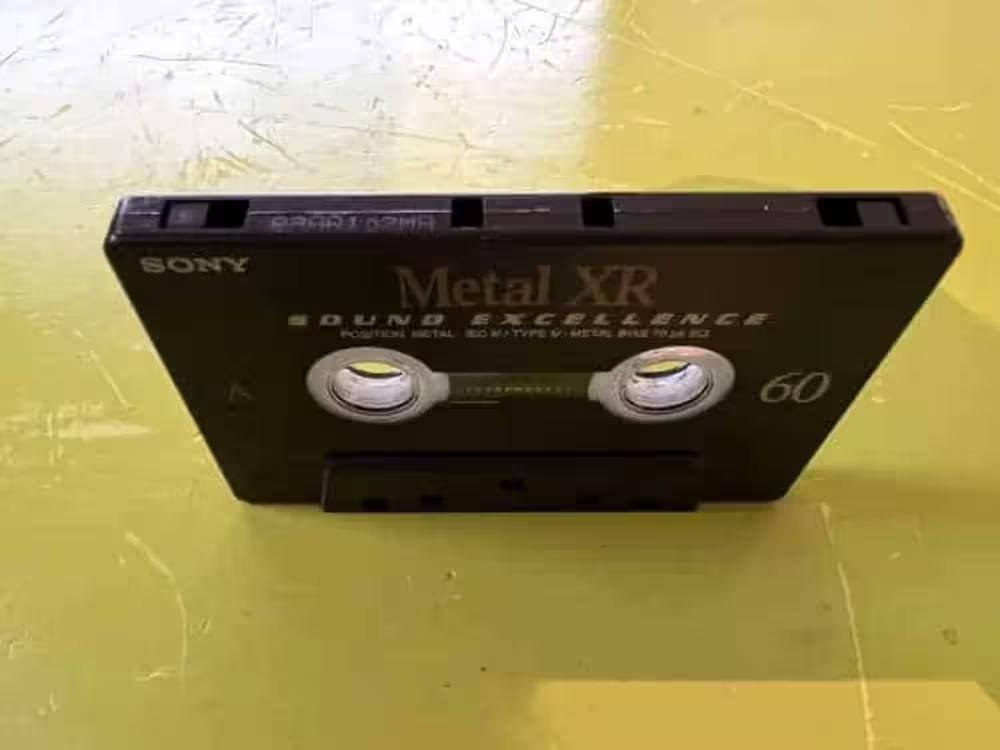 Type IV compact cassette
There was also a rare Type III cassette. Its shell looks identical to Type I, so automatic detection reads it as Type I. However, Type III actually needs the same EQ curve as Type II. This makes it easy to play back with wrong settings.
Another uncommon case is a Type II cassette recorded with 120 us EQ instead of the standard Type II curve. If this is not marked on the cassette or its case, identifying it during digitization can be impossible.
In practice, a deck that supports Type I, Type II, and Type IV covers nearly all cassettes you will encounter.
Playback Speed
The standard cassette speed is 1 7/8 inches per second (4.76 cm/s). Almost all cassettes were recorded at this speed. Half-speed recorders running at 15/16 ips (2.38 cm/s) and double-speed recorders at 3 3/4 ips (9.5 cm/s) do exist, but they are rare. For digitization, standard speed is enough in the vast majority of cases.
Noise Reduction Systems
Audio quality on cassettes improved greatly when Dolby noise reduction became common. Consumer decks most often had Dolby B and Dolby C. Other systems were also used: Dolby A, Dolby SR, dbx Type I, and dbx Type II.
If a cassette was recorded with noise reduction, the same system must be active during playback and digitization. Without the correct system, the audio will sound unnatural.
Figuring out which noise reduction was used can be very difficult if nothing is written on the cassette or its case.
High-Speed Digitization
Special equipment exists that can digitize cassettes at 2 to 4 times normal speed. This does not meet proper quality standards. At 4x speed, a 15 kHz tone becomes a 60 kHz signal. No equipment handles that as well as it handles normal-speed playback. Audio quality always suffers.
If you use a digitization service, make sure your tapes are played at their original recording speed. Polartape always digitizes cassettes and reel-to-reel tapes at the speed they were recorded.
Need a professional transfer?
Our cassette tape to digital conversion service plays every cassette on a calibrated studio recorder adjusted for that specific cassette.
Get a Quote